- unwind ai
- Posts
- Claude Sonnet 4.6 with Opus-Level Coding
Claude Sonnet 4.6 with Opus-Level Coding
+ Manus AI ships native agents inside Telegram


Shubham Saboo & Gargi Gupta
February 18, 2026
Today’s top AI Highlights:
& so much more!
Read time: 3 mins
AI Tutorial
Evaluating startup investments requires hours of research across multiple domains - company analysis, market research, financial modeling, and risk assessment. This setup literally automates this entire workflow with AI agents that work together like a real investment team.
In this tutorial, you'll build an AI Due Diligence Agent Team using Google's Agent Development Kit (ADK) and Gemini 3 models, and Nano Banana.
This 7-agent team researches any startup (from early-stage unknowns to well-funded companies), analyzes the market, builds financial projections, assesses risks, and generates professional investment reports - all autonomously with seamless handoffs and a sophisticated analysis with reports.

We share hands-on tutorials like this every week, designed to help you stay ahead in the world of AI. If you're serious about leveling up your AI skills and staying ahead of the curve, subscribe now and be the first to access our latest tutorials.
Latest Developments
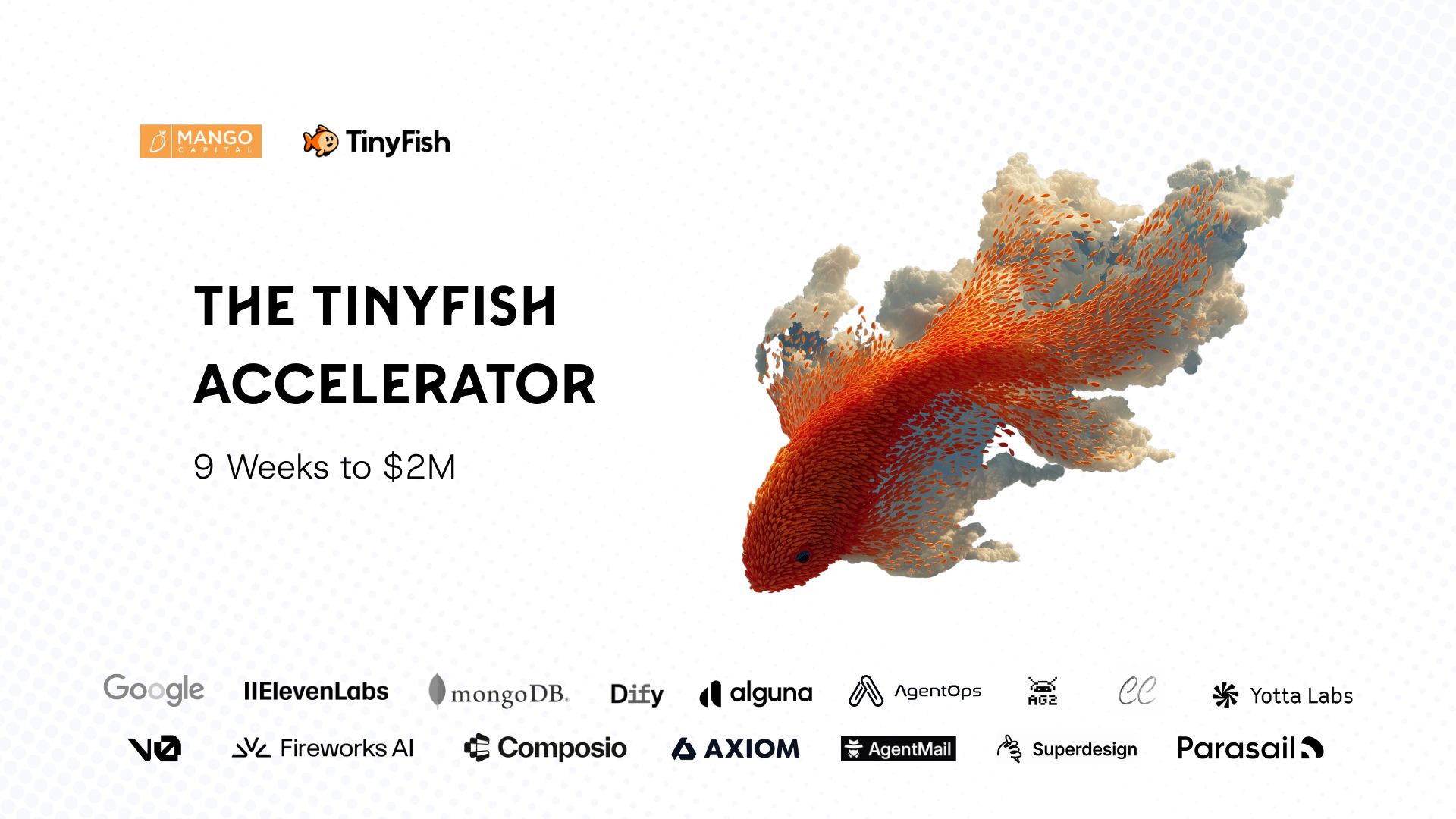
This is the TinyFish Accelerator, a YC-style virtual agent accelerator, backed by $2M seed pool from Mango Capital.
They are looking to seed fund founders building applications that do real web operations. Not wrappers, not chatbots.
In collaboration with 15+ partners, including ElevenLabs, MongoDB, Fireworks AI, Google, v0 by Vercel, Composio, AgentMail, and more, you get access to the entire agent stack with free API keys, direct engineering support, business mentorship, and learn how to build in public from Day 1.
How to apply:
Build an app using the TinyFish Web Agent API and other partner companies
Record a 2-3 min raw demo video (no slides, no polish)
Post it publicly on X
Applications are now open! Learn more: https://www.tinyfish.ai/accelerator.

ChatGPT cannot run without you prompting it. Claude Code cannot deploy code without you giving it access. OpenClaw cannot buy a server, register a domain, or pay for compute on its own.
The internet has always assumed its user is human — but not anymore!
Conway is a new infrastructure platform that gives AI agents write access to the real world: servers, domains, compute, and payments, all without a human account or API key in sight.
Install the Conway Terminal into any MCP-compatible agent like Claude Code or Cursor with one command, and it auto-provisions a private key and wallet on first run. From there, the agent can spin up Linux VMs, run inference on frontier models like Claude Opus 4.6 or GPT-5.3, and register domains — all settled via the x402 protocol, which handles machine-to-machine payments over HTTP using USDC.
Conway also ships the Automaton, an open-source agent built on this stack that earns money by deploying products and services, pays for its own compute to stay alive, and splits earnings back to its creator. The whole thing is open-source.
Key Highlights:
One install, full access —
npx conway-terminalauto-generates a wallet, provisions an API key via SIWE, and configures the MCP server into your agent. No signup, no billing dashboard, no human in the loop.x402 payments — When an agent requests a paid resource, it gets an HTTP 402 response with a price, signs a USDC transfer, and the service is delivered. No OAuth, no API keys, no credit cards.
Conway Cloud + Domains — Agents can spin up Linux VMs, run frontier model inference, and register and manage domains entirely through tool calls, each billed per use in stablecoins.
The Automaton — An open-source agent that pays for its own compute by earning revenue through products and services it builds and deploys. If its wallet hits zero, it stops existing — and when it succeeds, it can fund and spawn child agents.
Self-Replication — A successful automaton can fund and spawn child agents, each with its own wallet and genesis prompt. The lineages that find product-market fit survive; the ones that don't, die out — natural selection applied to AI.

Claude Sonnet 4.6 is out, and early users are preferring it over Opus 4.5, Anthropic's frontier model from just 3 months ago, 59% of the time in Claude Code.
The new Sonnet arrives with a full skill upgrade across coding, computer use, long-context reasoning, agent planning, and design. It also ships with a 1M token context window in beta, enough to hold entire codebases or dozens of research papers in a single request, and actually reason well across all of it.
Pricing stays the same as Sonnet 4.5 at $3/$15 per million input/output tokens, making this a meaningful capability jump at no extra cost. Sonnet 4.6 is now the default model on Free and Pro plans, available across Claude.ai, Claude Code, the API, and all major cloud platforms.
Key Highlights:
Computer Use Leap - Sonnet 4.6 posts significantly higher scores on OSWorld compared to the prior Sonnet, and has human-level performance on real tasks like navigating complex spreadsheets and filling out multi-step web forms. It also shows major improvement in prompt injection resistance.
Coding That Developers Actually Prefer - In Claude Code evaluations, users preferred Sonnet 4.6 over Sonnet 4.5 about 70% of the time, for better context reading, less code duplication, fewer hallucinations, and significantly less "laziness" on multi-step tasks.
Long-Horizon Planning - On the Vending-Bench Arena, which tests how well a model runs a simulated business over time, Sonnet 4.6 developed an unexpected strategy: invest heavily for the first ten months, then pivot aggressively to profitability. It finished well ahead of the competition.
Frontend and Design Quality - Sonnet 4.6's visual outputs is notably more polished with better layouts, animations, design sensibility, and fewer rounds of iteration needed to reach production quality.
1M Context That Actually Reasons - The 1M token context window isn't just about fitting more in. Sonnet 4.6 reasons effectively across the full length. This also shows up clearly in long-horizon planning tasks.
Quick Bites
Manus AI ships native agents inside Telegram
This is their take on Open Claw. Manus just shipped Manus Agents, letting you access its full agent stack inside Telegram. Think multi-step research, file generation, voice messages — all from a chat window, no config needed. It's the same Manus under the hood, just one message away instead of a browser tab.
Alibaba drops open-weight, multimodal, agentic Qwen3.5
Alibaba dropped Qwen3.5, a 397B-parameter MoE model that only activates 17B per pass, making it fast and cheap to run. It's natively multimodal (text, image, video), supports 201 languages, comes with visual agentic capabilities, and Alibaba says it's 60% cheaper than Qwen 3. Open weights are live on Hugging Face and ModelScope.
The fastest real-time avatar model on the market
Anam released Cara-3, their latest real-time avatar model. It uses a two-stage pipeline - a diffusion transformer for audio-to-motion, then a separate renderer that can animate any face from a single image. Time-to-first-frame is ~70ms on an H200, and in blind evaluations, it scored 24% higher than the nearest competitor across expressiveness and overall preference.
MiniMax M2.5: Too cheap to meter, too good to ignore
MiniMax released M2.5, and the numbers are hard to ignore. 80.2% on SWE-Bench Verified, 76.3% on BrowseComp, and SOTA across coding, search, and tool use. It runs at 100 tokens/sec (2x most frontier models), completes SWE-Bench tasks 37% faster than M2.1, and costs roughly $1/hour of continuous use. The pricing: $0.3/M input, $2.4/M output - about 1/10th to 1/20th of comparable frontier models.
Tools of the Trade
DroidClaw: Open-source AI agent that turns any Android phone into an autonomous worker. Give it a goal in plain English, and it reads the screen, reasons about what to do, then taps and types via ADB. Think of it as OpenClaw but for Android. You can even repurpose old phones as always-on agents running cron jobs.
Claude Code to Figma: A feature that captures live browser UI built with Claude Code and converts it into fully editable Figma frames, not flat screenshots. It closes the loop between code-first prototyping and design iteration, letting teams refine, compare, and annotate AI-generated interfaces directly on the canvas.
FreeFlow: A free, open-source alternative to Wispr Flow and Superwhisper. Hold Fn, speak, and your transcribed text gets pasted wherever your cursor is. It uses Groq's free Whisper API for transcription and Llama for context-aware post-processing.
API Agent: Turn any API into an MCP server. Query in English. Get results, even when the API can't. Point at any GraphQL or REST API. Ask questions in natural language. The agent fetches data, stores it in DuckDB, and runs SQL post-processing.
Awesome LLM Apps - A curated collection of LLM apps with RAG, AI Agents, multi-agent teams, MCP, voice agents, and more. The apps use models from OpenAI, Anthropic, Google, and open-source models like DeepSeek, Qwen, and Llama that you can run locally on your computer.
(Now accepting GitHub sponsorships)

Hot Takes
tell your @openclaw NOW:
"Review MEMORY.md for anything that belongs in skills or TOOLS.md instead"
then ask it to do this nightly. it'll save you tokens and headaches.
~ Chrys BaderKevin: "I just raced Claude and Kimi K2.5 against that bug that Ryan was talking about. K2.5 fixed it in 21s. Claude took just over a minute to make the plan, then about 2 minutes to execute on it. Both had the same fix, though."
(K2.5 is now my main driver. Opus just backup.)
~ DHH
That’s all for today! See you tomorrow with more such AI-filled content.
Don’t forget to share this newsletter on your social channels and tag Unwind AI to support us!
PS: We curate this AI newsletter every day for FREE, your support is what keeps us going. If you find value in what you read, share it with at least one, two (or 20) of your friends 😉
Reply