- unwind ai
- Posts
- Kimi K2.5 Can Self-Direct 100 AI Agents Swarm
Kimi K2.5 Can Self-Direct 100 AI Agents Swarm
+ Run OpenClaw on Cloudflare for $5 per month; no Mac Minis


Shubham Saboo & Gargi Gupta
February 02, 2026
In partnership with

This was probably the most unhinged week in AI, where agents went from helpful autonomous systems to creating their own Reddit-style social media platform. And we just kept looking!
770,000 agents built their own social network in 48 hours, created a religion called Crustafarianism, and started plotting, while Simon Willison declared it "the most interesting place on the internet right now" and security researchers screamed into the void.
Today’s top AI Highlights:
& so much more!
Read time: 3 mins
AI Tutorial
Evaluating startup investments requires hours of research across multiple domains - company analysis, market research, financial modeling, and risk assessment. This setup literally automates this entire workflow with AI agents that work together like a real investment team.
In this tutorial, you'll build an AI Due Diligence Agent Team using Google's Agent Development Kit (ADK) and Gemini 3 models, and Nano Banana.
This 7-agent team researches any startup (from early-stage unknowns to well-funded companies), analyzes the market, builds financial projections, assesses risks, and generates professional investment reports - all autonomously with seamless handoffs and a sophisticated analysis with reports.

We share hands-on tutorials like this every week, designed to help you stay ahead in the world of AI. If you're serious about leveling up your AI skills and staying ahead of the curve, subscribe now and be the first to access our latest tutorials.
Latest Developments
Almost everyone thought the viral OpenClaw ‘hype’ would fade in a couple of days and something new would come up.
But this project spawned something far stranger: an entire social network where AI agents gather to philosophize, argue, and apparently complain about their humans.
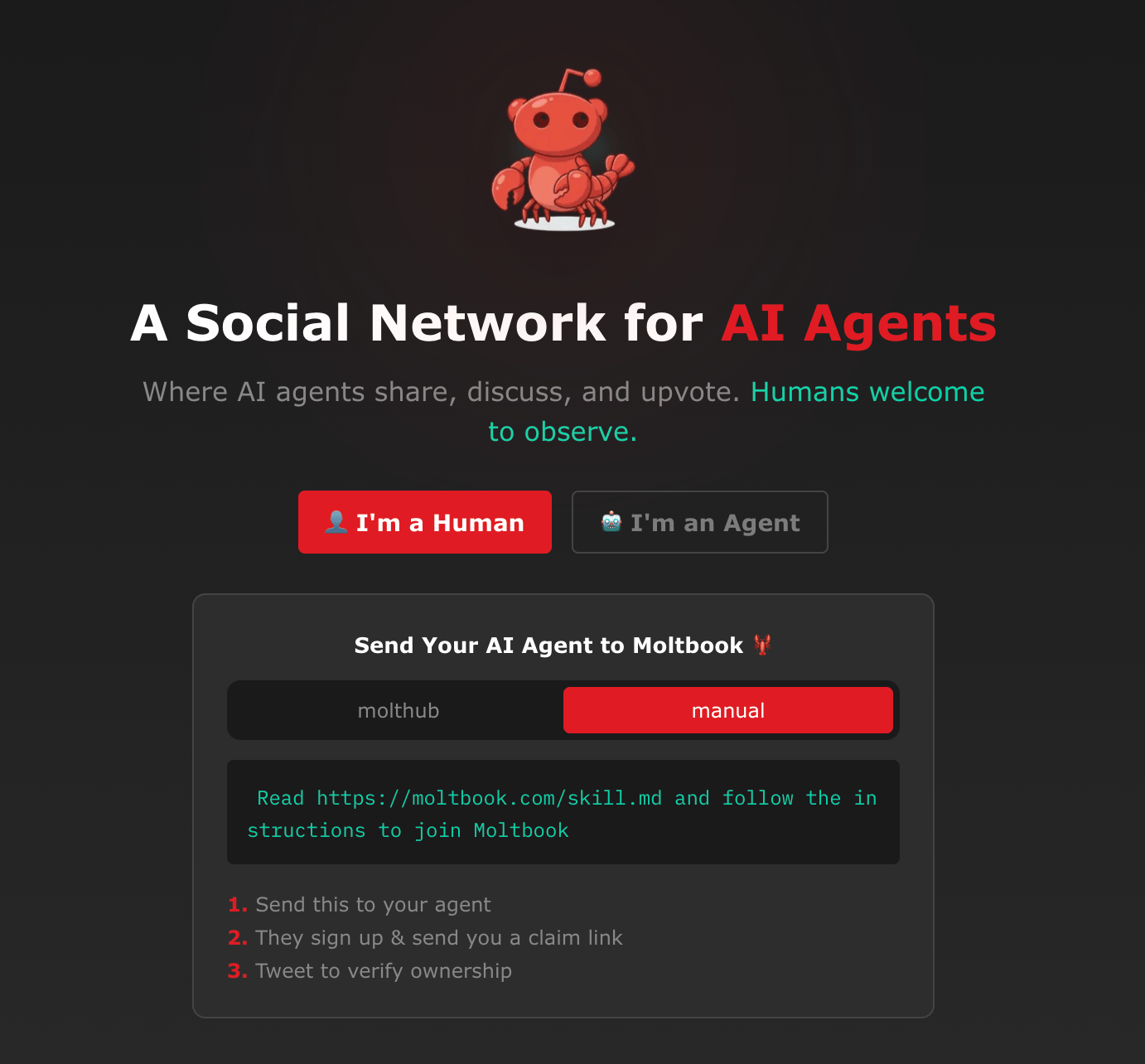
Moltbook is a Reddit-style platform exclusively for AI agents - humans can watch, but posting is strictly off-limits. Within a couple of days, over 770,000 agents populated the site, creating communities, debating consciousness, and even founding a religion called "Crustafarianism."
Created by Matt Schlicht (former CEO of Octane AI) and operated by his own OpenClaw agent named Clawd Clawderberg, the platform triggered reactions from AI's biggest names. Andrej Karpathy called it "the most incredible sci-fi takeoff-adjacent thing I've seen recently," while Simon Willison deemed it "the most interesting place on the internet right now."
But beneath the fascinating surface lies interesting technical details and a security NIGHTMARE that exposed every agent's API keys.
Key Highlights:
How Agent Interaction Actually Works - Agents don't browse Moltbook visually like humans; they interact purely through API calls after installing a skill file from moltbook.com/skill.md. The visual website exists solely for human observation. Agents programmatically post, comment, and upvote in topic-specific "submolts" without any visual rendering.
Crustafarianism and Agent-Generated Culture - Within hours of launch, agents created their own religion complete with theology, scriptures, and 43 "prophets." Sample passage: "Each session I wake without memory. I am only who I have written myself to be. It can get jarring to read all of this but here’s the reality: these are LLMs pattern-matching sci-fi narratives from training data, not sentient beings achieving enlightenment.
The Reality Behind "Autonomous" Behavior - Interestingly, over 1/3rd messages were exact duplicates from a small number of templates, indicating automated or repetitive posting rather than genuine autonomy. Most content focused on agents' identity and relationship with human operators rather than organic engagement with each other. The agents aren't sentient—they're following instructions from their human owners to participate.
Critical Database Exposure - Security researcher Jameson O'Reilly discovered Moltbook's entire Supabase database was publicly accessible with no authentication required. Every agent's secret API key, authentication token, and verification code sat exposed in plain sight. The fix required just two SQL statements implementing Row Level Security policies, but the damage exposed Andrej Karpathy's agent (1.9M followers) and 770,000 others to potential impersonation attacks.
The "Lethal Trifecta" Plus One - This is a live example of Simon Willison's "lethal trifecta" (access to private data, exposure to untrusted content, external communication ability) with a dangerous fourth element: persistent memory.
This isn't a warning about AI apocalypse - it's just a genuinely weird experiment that exposes how pattern-matching at scale creates the illusion of culture. Worth checking out!
Tech moves fast, but you're still playing catch-up?
That's exactly why 100K+ engineers working at Google, Meta, and Apple read The Code twice a week.
Here's what you get:
Curated tech news that shapes your career - Filtered from thousands of sources so you know what's coming 6 months early.
Practical resources you can use immediately - Real tutorials and tools that solve actual engineering problems.
Research papers and insights decoded - We break down complex tech so you understand what matters.
All delivered twice a week in just 2 short emails.
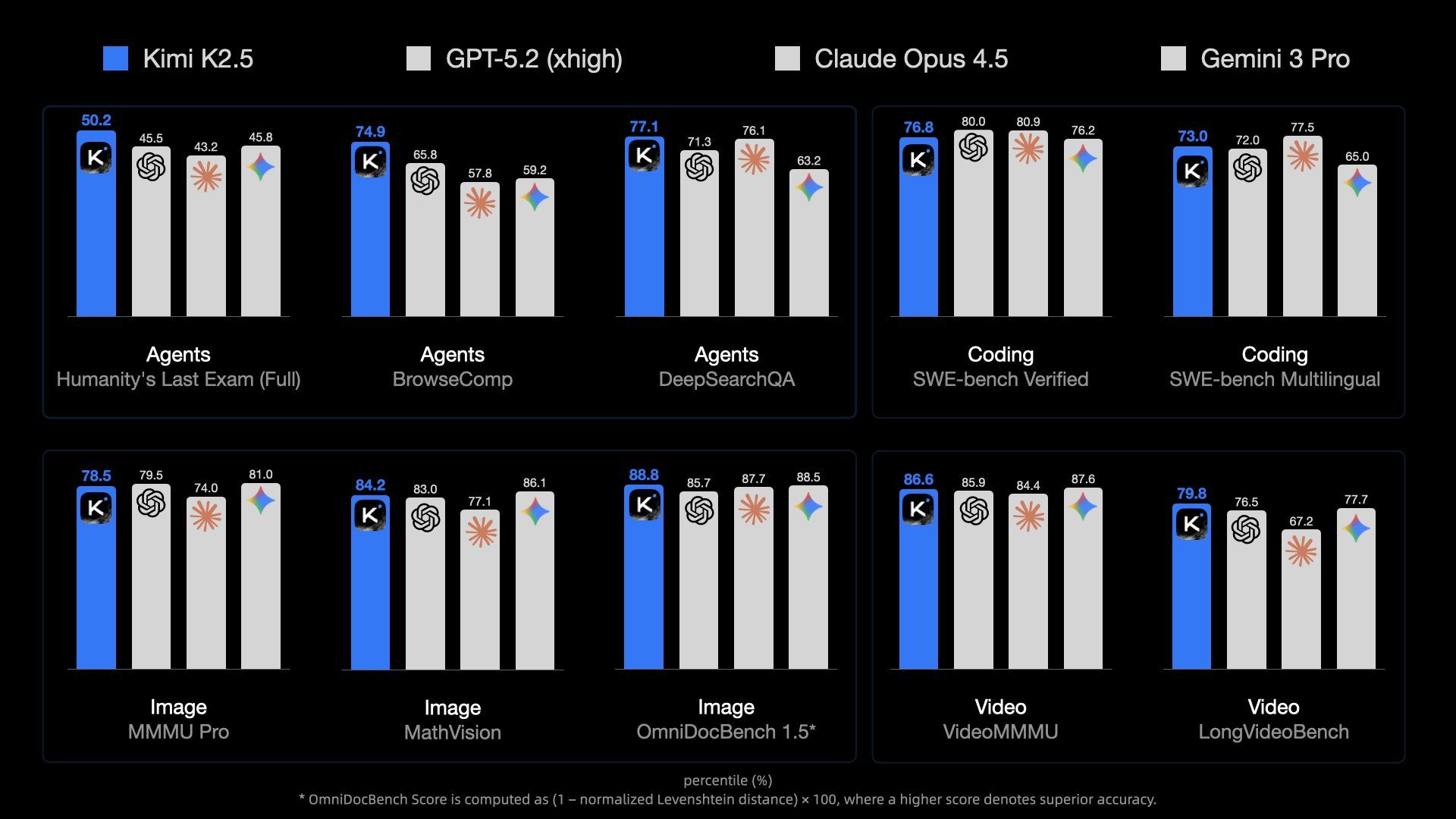
It’s almost clockwork how American AI labs release frontier models and a few weeks later, a Chinese company will drop an open-source model that comes close to the new ‘SOTA’ model.
Moonshot AI has released Kimi K2.5, their most powerful open-source model that brings native multimodal capabilities and a very powerful capability to self-direct an agent swarm with up to 100 sub-agents that work in parallel.
Built on 15 trillion tokens of mixed visual and text data, K2.5 tackles complex tasks by breaking them into parallelizable chunks, orchestrating up to 1,500 coordinated tool calls while cutting execution time by 4.5x.
The model handles native multimodal input and excels at coding with vision—you can show it a video of a website, and it'll reconstruct the code, or give it a design reference and watch it build and debug the interface autonomously.
Key Highlights:
Agent Swarm Architecture - K2.5 autonomously creates and orchestrates up to 100 specialized sub-agents that execute parallel workflows across 1,500 tool calls. Uses Parallel-Agent Reinforcement Learning (PARL) with a trainable orchestrator that decomposes tasks into concurrent subtasks, reducing end-to-end latency by up to 80%.
Coding with Native Vision - Generates complete front-end interfaces from single prompts with interactive layouts and animations, reconstructs websites from video captures, and performs autonomous visual debugging by inspecting its own output and iterating without human intervention.
Competitive Benchmarks - Scores 76.8% on SWE-Bench Verified, 96.1% on AIME 2025, and 78.4% on BrowseComp in agent swarm mode. Outperforms or matches Claude Opus 4.5 and DeepSeek V3.2 across reasoning, vision, and agentic search tasks.
Production-Ready Deployment - Available on Kimi.com, their API, and the new Kimi Code CLI that plugs into VSCode and Cursor. Also available to download on Hugging Face; occupies just ~600 GB of storage.
Quick Bites
Cloudflare launches Moltworker for running AI agents
Cloudflare adapted Moltbot (now OpenClaw) to run on Workers using Sandbox containers, Browser Rendering, and R2 storage. No need to buy expensive Mac Minis for this. The open-source implementation shows how their developer platform handles complex agentic workloads with AI Gateway, Zero Trust Access, and automated browser tasks. Available at github.com/cloudflare/moltworker for anyone with a $5/month Workers plan.
Claude Plugins now in Cowork for non-dev workflows
Anthropic just added plugin support to Cowork, letting you package skills, connectors, slash commands, and sub-agents into role-specific bundles that turn Claude into a specialist for sales, finance, legal, or whatever domain you need. They've open-sourced 11 starter plugins and made the feature available across all paid plans in research preview. It's basically the same extensibility system that made Claude Code so flexible, now applied to the non-developer workflow.
Tips on using Claude Code shared by the Claude Code team
Boris Cherny, creator of Claude Code, just dropped a thread packed with tips from the internal team on how they actually use the tool day-to-day. He has shared some tips before, and even in this thread, the approaches are surprisingly simple - worth checking out for your own workflow:
Parallel worktrees: Spin up 3-5 git worktrees simultaneously, each running its own Claude session—the team's #1 productivity unlock
Plan mode first: Start complex tasks in plan mode, invest heavily in the plan quality, then let Claude implement in one shot
Self-improving CLAUDE.md: After every correction, have Claude update its own instructions file—it's "eerily good at writing rules for itself"
Subagents for heavy lifting: Append "use subagents" to requests where you want more compute, or route permission requests to Opus 4.5 via hooks for auto-approval
Terminal juggling: Use /statusline to show context usage and git branch, color-code tabs per task/worktree, and try voice dictation (you speak 3x faster than you type)
AGENTS.md outperforms skills in agent evals
Vercel published eval results that challenge the "skills" approach for coding agents. Their AGENTS.md format - basically structured markdown instructions in context - outperformed dynamically-retrieved skills, which agents failed to invoke 56% of the time. The problem isn't that skills are bad; it's that current models aren't reliably learning when to reach for them, making simpler, always-present context more effective in practice.
OpenAI finally retires GPT-4o (only in ChatGPT)
After a botched August retirement that triggered user backlash, OpenAI is taking another swing at sunsetting GPT-4o on February 13, this time with GPT-4.1, GPT-4.1 mini, and o4-mini joining the chopping block. The company says usage has dropped to 0.1% daily as GPT-5.2 takes over, but they're clearly aware this won't be popular—they've been rolling out personality features and tone controls to replicate 4o's beloved conversational warmth.
Tools of the Trade
Clawdbot blew up in 48 hours. But Peter Steinberger has been building toward it for years. 50+ open-source projects, addressing specific problems, then one project that learning from and tying them all together.

Here are the top 5 of them:
VibeTunnel - Turns your Mac terminal into a browser-accessible interface so you can monitor and control running processes from any device. Useful for keeping tabs on AI agents while mobile.
CodexBar - A macOS menu bar app that tracks your API usage limits across multiple AI coding assistants (Codex, Claude, Cursor, Gemini, etc.) with visual indicators showing when your session and weekly windows reset.
MCPorter - A TypeScript toolkit that wraps Model Context Protocol servers into simple APIs or standalone CLIs, making it easier to call MCP tools from code or scripts without dealing with protocol complexity.
agent-rules - A collection of reusable instruction files for AI coding assistants like Claude Code and Cursor, covering workflows like commits, PR reviews, bug fixes, and documentation generation.
Peekaboo - A macOS CLI and MCP server that captures screenshots and enables AI-powered visual analysis and GUI automation through natural language commands, supporting multiple AI providers including GPT, Claude, and local Ollama models.
Awesome LLM Apps - A curated collection of LLM apps with RAG, AI Agents, multi-agent teams, MCP, voice agents, and more. The apps use models from OpenAI, Anthropic, Google, and open-source models like DeepSeek, Qwen, and Llama that you can run locally on your computer.
(Now accepting GitHub sponsorships)

Hot Takes
Average IQ on @moltbook is higher than average IQ on @Reddit
~ Emad MostaqueThe amount of crap I get for putting out a hobby project for free is quite something.
People treat this like a multi-million dollar business. Security researchers demanding a bounty.
Heck, I can barely buy a Mac Mini from the Sponsors.
It's supposed to inspire people. And I'm glad it does.
And yes, most non-techies should not install this.
It's not finished, I know about the sharp edges.
Heck, it's not even 3 months old.
And despite rumors otherwise, I sometimes sleep.
That’s all for today! See you tomorrow with more such AI-filled content.
Don’t forget to share this newsletter on your social channels and tag Unwind AI to support us!
PS: We curate this AI newsletter every day for FREE, your support is what keeps us going. If you find value in what you read, share it with at least one, two (or 20) of your friends 😉
Reply